1.Gleeble 3800 system
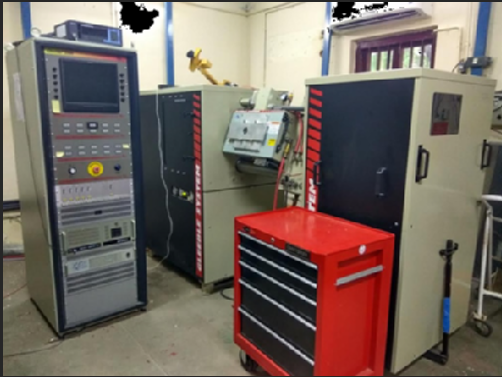
The Gleeble 3800 is a fully integrated digital closed-loop control thermal and mechanical testing system. Feature like, easy-to-use Windows OS based computer software in combination with an array of powerful processors provides user friendly interface to create, run and analyze the data from thermal-mechanical tests and physical simulations programs. Gleeble 3800 system uses direct resistance heating system to heat the specimens at rates up to 10,000°C/second, or can hold steady-state equilibrium temperatures.
•General Specifications of Gleeble 3800 System:
1. Maximum heating rate - 10,000°C/second;
2. Maximum cooling rate - 10,000°C/second with water quenching system;
3. Maximum stroke rate - 2000 mm/second
4. Maximum force - 10 ton in tension and 20 ton in compression mode.
5. Specimen:-
Specimen Geometry: Round, Square and Flat geometry.
Specimen Size: (a) 5 mm dia. - 20mm dia. for Round specimen;
(b) 5 mm - 20 mm square for Square specimen;
(c) 2mm - 5mm thick for Flat specimen.
2.BRAZING FURNACE
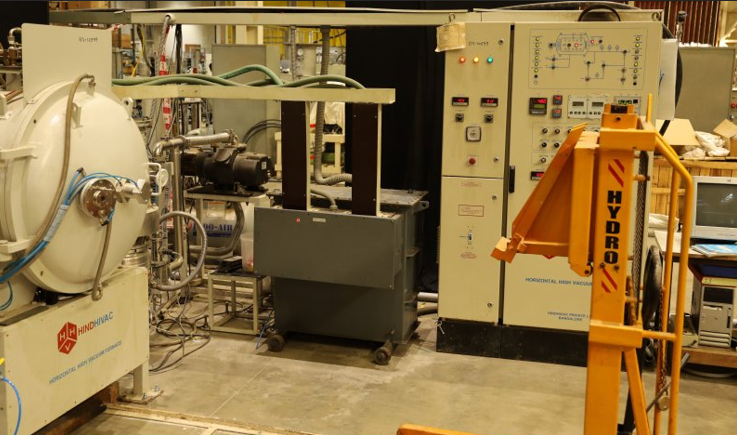
This is a PLC (Programmable Logic Control) controlled High Vacuum Furnace with Data Acquire Software SCADA (Supervisory Control and Data acquisition). Brazing is done either in high vacuum environment or inert gas environment.
Brazing furnace can operate in following three modes:
1) High Vacuum Heating, High Vacuum cooling;
2) High Vacuum + Inert gas heating, Natural or Fast cooling
3) Inert gas Heating and Inert gas cooling.
Parameters of Vacuum Brazing Furnace:
1) Heaters: Molybdenum strip;
2) Hot zone: 350mm(width) x 150mm(height) x 500mm(depth)
3) Maximum Charge Weight: 75kg
4) Temperature Uniformity: +/- 5 C
5) Heating rate : Programmable From 1 °C/min to 25 °C/min.
6) Rapid cooling :Gas fast cooling using Internal blower and Heat exchanger
3.METALLOGRAPHIC LAB FACILITIES
• Metallographic equipment(s) generally include sample cutting, grinding, mounting, polishing, etching, microstructural analysis etc. Depending upon the requirement of the application, following equipment(s) can be used to obtain proper sample preparation techniques.
Following are the metallographic lab equipment in the division:
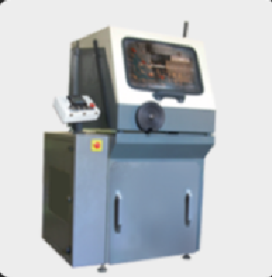
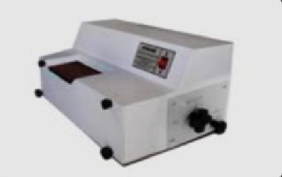
i) Abrasive Cutting Machine
Usage: Machining of specimen, Tungsten tile machining, CuCrZr tube & block, SS pipes & block etc.
ii) Pneumatic Mounting Press
Usage: Making of moulding of different sizes specimens, Automatic cooling system
iii) General Purpose grinding Machine
Usage: Rough grinding of specimens, plate, tiles, copper block etc.
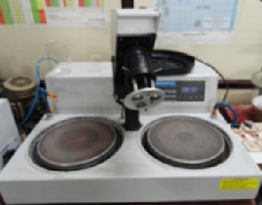
iv) Semi-automatic double disc polishing machine
Usage: Polishing of specimens, fine polishing using different grit size SiC papers, Mirror finish polishing using diamond paste on velvet cloth etc.
v) Metallurgical Microscope -Image analysis software-CCD colour camera
Usage: Optical microstructure analysis of specimen.
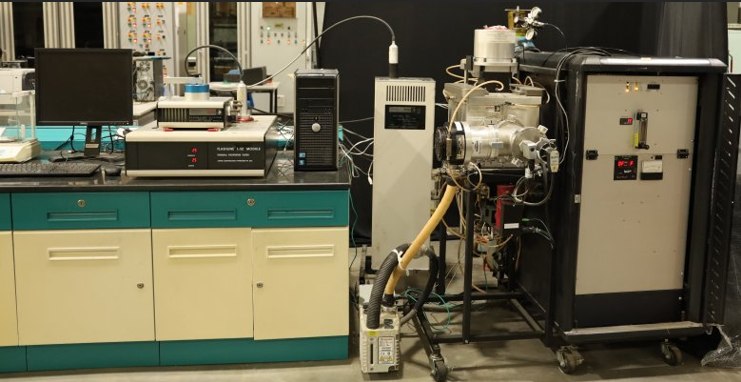
4.Laser Flash System
Principle:
Principle and working method of equipment is as per ASTM E1461. A small, thin, disc specimen mounted horizontally or vertically is subjected to a high-intensity short duration thermal pulse. The energy of the pulse is absorbed on the front surface of a specimen and the resulting rear face temperature rise is measured. Thermal diffusivity values are calculated from the specimen thickness and the time required for the rear face temperature rise to reach 50% percentages of its maximum value. System also measures the specific heat capacity of a material by comparative method.
System Details:
System consists of remote-controlled Class I Nd: glass laser with maximum power 35 joules. Ultrahigh tungsten furnace works under Vacuum (up to 10-6 torr) or argon atmosphere with operating temperature range RT to 2100°C. It consist room temperature add-on module with temperature range RT to 200°C and LN2 cooled InSb detector for rear surface temperature measurement.
5.Magnetron Sputtering System
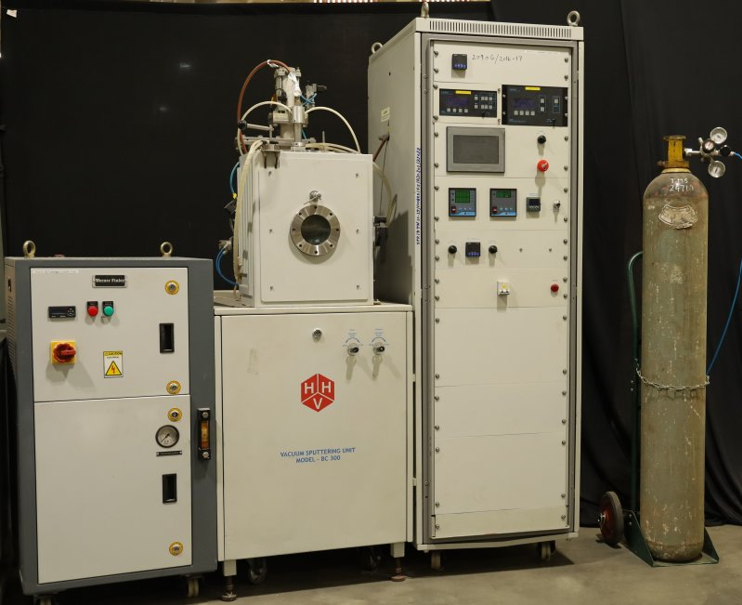
IPR RF Magnetron Sputtering Unit (BC-300) make HHV, Bangalore is having maximum capacity of RF power of 300W and substrate heating up to 1,000 oC. The vacuum chamber can work at high vacuum of the order of 10-6 mbar. Metal targets like Ti, Cu, Cr, Al etc. and Non-metal like Graphite target are normally used. This unit provides a complete coating solution for the deposition of both metals and non-metal on various substrates with good control of uniformity.
The major components of the unit are:
• Vacuum pumping system (HHV make FD-12 Rotary pump as primary, Edwards Next-400 Turbo Pump as secondary pump).
• Provided gas (like Argon) purging line in the vacuum chamber during the sputtering process.
• PLC vacuum controller, HMI touch control panel.
• The 4 inch substrate heater cum substrate holder with rotation facility mounted on the base plate of the vacuum chamber.
Water chiller for continuous cooling the vacuum chamber & Magnetron.