

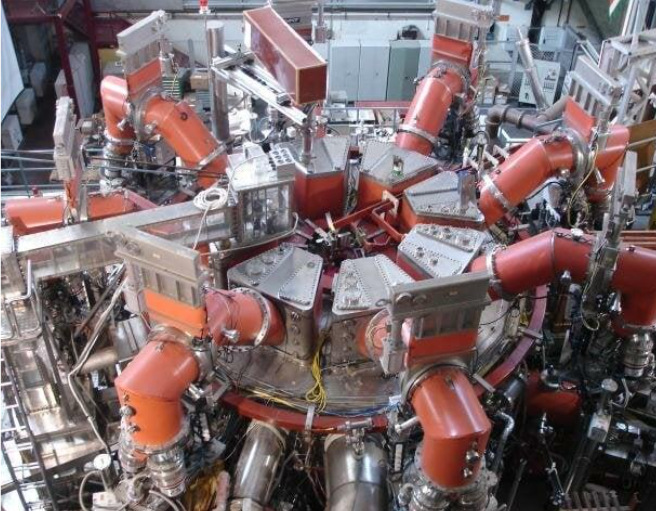
The Section is responsible for the operation, maintenance and up gradation of all superconducting and copper magnet systems of SST-1 tokamak, ensuring their reliable, safe, and efficient performance in support of ongoing experiments. The scope of its activities encompasses preventive and corrective maintenance, system performance evaluation, reliability enhancement, calibration, Standard Operating Protocols (SOP), QA/QC, and implementation of technological improvements as and when required. Further, the Section is responsible for the operation, maintenance and integration of High Current Power Supplies, magnet Data Acquisition (DAQ) systems, Quench Protection and Detection Systems (QPDS), insulation health monitoring systems, and associated instrumentation for the accurate monitoring, diagnostics, and analysis of existing SST-1 magnets as well as ongoing/ newly developed LTS/HTS high field magnets performance during validation, testing and operation. It also undertakes diagnostic investigations and provides engineering solutions to address technical challenges related to magnet operation, electrical integrity, thermal performance, and overall system reliability. The section is also involved in SST-1 and SST-BHARAT related technology development and validation activities.
Magnet Operation and Maintenance
Overview
Magnet Operation and Maintenance
Experiments
Magnet System of SST-1 comprises of sixteen superconducting D-shaped Toroidal Field (TF) coils, nine superconducting Poloidal Field (PF) coils, and pair of resistive PF coils inside the vacuum vessel and Central Solenoid with 6 compensating coils. TF magnets generate the basic 3.0 T field at the major radius of 1.1 m. Low resistance lap inter-pancake joints within and inter-coil joints between the coils have been made. Magnets are cooled with supercritical helium at 4 bar and 4.5 K, which is fed at the high field region in the middle of each of the double pancake over a hydraulic path length of 47m. Voltage taps across joints and termination location are used for quench detection. The quench detection front-end electronics ensures fail proof quench detection based on differential voltage measurement scheme. Quench detection system sends the quench trigger to the power supply system directly on a dedicated fiber optic link. Flow meters at the inlet of the TF and PF magnets, temperature sensors at the critical joint locations and at the outlet of the flow paths for enthalpy estimation, hall probes for field direction and magnitude measurements are the other sensors.
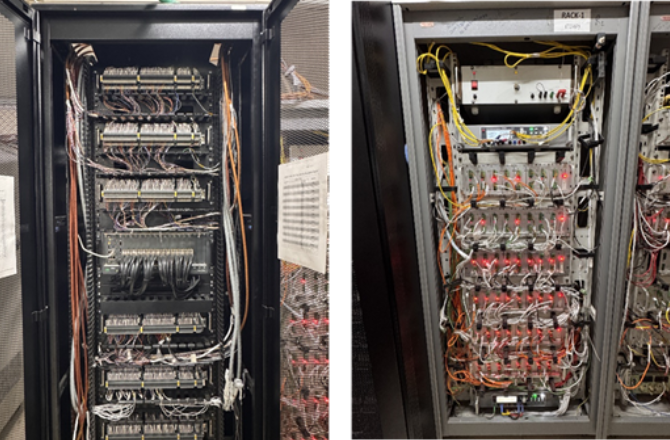
The Magnet Instrumentation, Protection and Data Acquisition (DAQ) Facility provides comprehensive infrastructure for the operation, monitoring, and protection of the SST-1 superconducting magnet system. The facility integrates advanced cryogenic sensors, dedicated sensor electronics, Toroidal Field (TF) and Poloidal Field (PF) quench detection systems, and a high-speed PXIe-based DAQ system for real-time monitoring, diagnostics, and protection of superconducting magnets. All instrumentation and data acquisition channels are designed with 2.5 kV electrical isolation, ensuring reliable operation in the high electromagnetic interference environment of the tokamak. A robust grounding and shielding scheme has been implemented to enhance measurement accuracy and improve the reliability of magnet protection systems. The facility supports comprehensive pre-operational activities, including insulation health assessment, quench protection validation, and functional verification of instrumentation before each plasma experimental campaign. During plasma operations, the complete magnet system is monitored continuously to ensure safe superconducting operation and prompt fault detection. In addition, a dedicated PF coil pick-up voltage monitoring system provides detailed diagnostics and performance analysis, contributing to the reliable operation of the SST-1 magnet system.
3.High Current DC Power Supplies for Superconducting and Resistive Magnets
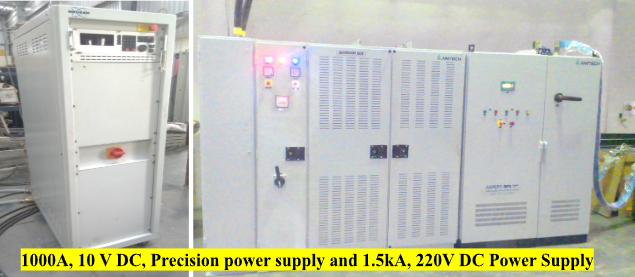
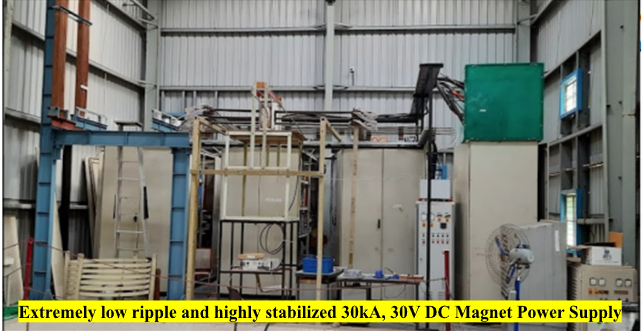
The High-Current DC Power Supply Facility provides dedicated infrastructure for the testing, characterization, and operation of superconducting conductors, cables, and magnet systems for fusion and cryogenic applications. The facility comprises 1 kA, 1.5 kA, and 30 kA DC power supplies, supporting a wide range of experimental and qualification activities. The 1 kA DC power supply is utilized for the electrical characterization of superconducting wires, cables, and prototype magnet systems. The 1.5 kA, 220 V DC power supply is presently deployed for the Toroidal Field (TF) Correction Coil of the Aditya-U Tokamak and has also been employed for testing 1:1 prototype Edge Localized Mode (ELM) coils and the development of a 1.5 kA Hybrid DC Breaker.The 30 kA, 30 V DC magnet power supply, comprising three parallel-connected 10 kA, 30 V modules, delivers continuous current up to 24 kA. The facility supports the Molten Lead Lithium Magneto-Hydrodynamics (LLMHD) experiment and qualification of LN₂-cooled NbTi Cable-in-Conduit Conductors (CICC) and HTS (REBCO) cables. The system has demonstrated reliable operation through successful continuous testing at 22 kA for more than 8.5 hours. It is also utilized for the electrical characterization of superconducting wires, cables, and prototype magnet systems.
4.Helium Paschen Test Facility
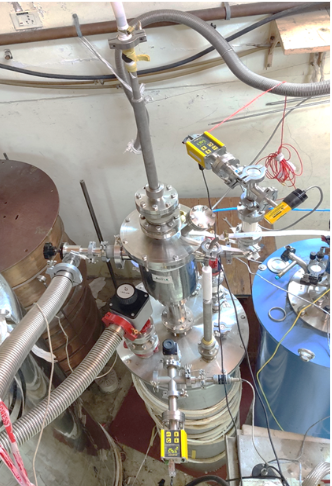
The Helium Paschen Test Facility has been established for the electrical characterization and qualification of high-voltage insulation systems under vacuum and cryogenic conditions. The facility is primarily utilized for evaluating the electrical performance of SST-1 vacuum barriers at temperatures down to 80 K, replicating the operating conditions encountered in superconducting fusion magnet systems. The facility is designed to investigate electrical breakdown and arcing phenomena under helium leakage and high-voltage conditions. It enables systematic studies over a helium pressure range from 10⁻⁵ mbar to 1 mbar, covering the critical Paschen regime relevant to cryogenic insulation systems. The setup supports DC voltage testing up to 5 kV and high-voltage impulse testing with rise rates of approximately 50 kV/s, facilitating comprehensive evaluation of dielectric strength and insulation integrity. The facility serves as a dedicated qualification platform for the development, validation, and reliability assessment of vacuum insulation systems and high-voltage components used in superconducting magnets and other cryogenic systems for fusion applications.
5.Superconducting Wire Characterization Facility at Background Field (10 T):
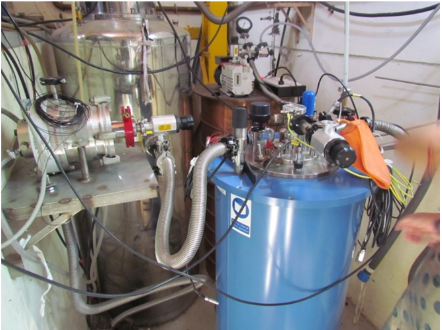
The Superconducting Wire Characterization Facility has been established for the performance evaluation and qualification of superconducting wire samples under high magnetic field and cryogenic conditions. The facility enables electrical characterization of superconducting materials in background magnetic fields of up to 10 T and at temperatures as low as 2 K, thereby simulating operating conditions relevant to fusion magnet applications. The test setup can accommodate wire samples with dimensions up to approximately 25 mm in diameter and 100 mm in length, allowing comprehensive evaluation of superconducting performance, including critical current and electrical characteristics under combined magnetic field and low-temperature environments. The facility is equipped with precision 500 A and 100 A DC power supplies, providing stable and controlled current sources for experimental investigations. The integrated instrumentation and data acquisition system ensure accurate measurement and reliable characterization of superconducting samples. This facility supports research and development activities related to the qualification of superconducting conductors, material evaluation, and performance validation for advanced superconducting magnet systems used in fusion and other cryogenic applications.
6.Tan Delta Insulation Characterization Facility
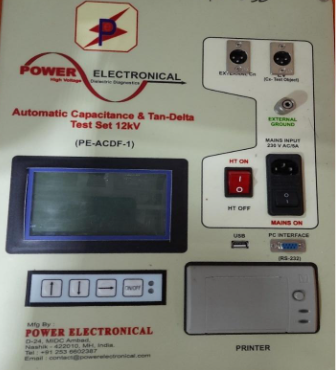
The High-Voltage Insulation Characterization Facility has been established for the development, qualification, and evaluation of insulation systems for fusion-grade and next-generation superconducting magnets. The facility supports research and development activities related to the electrical performance and long-term reliability of high-voltage insulation used in cryogenic magnet systems. The facility is equipped with a 12 kV, 200 mA Automatic Capacitance and Tan Delta (Dissipation Factor) Testing System, installed and commissioned at IPR. The system enables accurate measurement of capacitance and dielectric dissipation factor (tan δ), which are widely accepted diagnostic parameters for assessing insulation quality, identifying dielectric degradation, and predicting insulation service life. The facility provides a reliable platform for electrical characterization, quality assurance, and condition assessment of insulation materials and components developed for fusion magnet applications. It plays an important role in validating insulation integrity, supporting indigenous technology development, and ensuring the safe and reliable operation of superconducting magnet systems under high-voltage operating conditions.
Division Head

Upendra Prasad
Section Head

Azadsinh R. Makwana
Team Members