

The main activities undertaken in the atmospheric plasma division include (a) Plasma pyrolysis (b) Nanopowder generation by plasma (c) Textile treatment by plasma (d) Plasma sterilization (e) Surface modification of polymers by plasma (f) Plasma spray coating (g) Plasma activated water (h) Plasma torches
Plasma Application
Overview
Plasma Application
Experiments
1.Plasma Pyrolysis of Waste
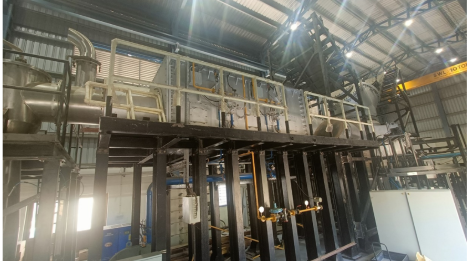
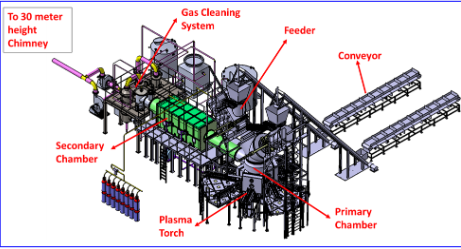
Our laboratory focuses on the development of thermal plasma-based waste disposal and energy recovery technologies. We have recently developed 5 TPD plasma pyrolysis plant to dispose biomedical waste. The system has been transported to Varanasi where it will be installed and commissioned. The Biomedical Waste Treatment Facility (RAUDRATM) will dispose the waste that comes out from 10000 beds from different hospitals in an environment friendly manner.
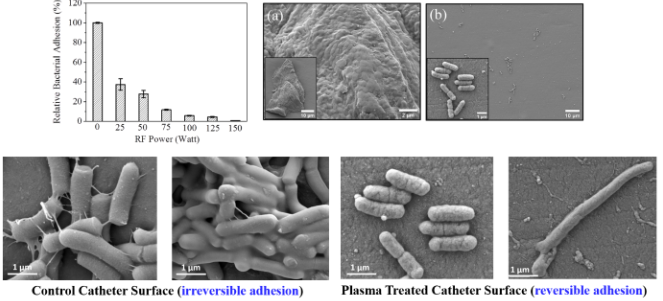
Plasma Surface Modification of various material surfaces is carried out in our laboratory to tailor their surface properties without affecting their bulk characteristics. Using low-temperature plasma generated under controlled vacuum conditions, material surfaces are modified to achieve functionalities such as improved wettability, enhanced adhesion, surface cleaning, activation, etching, and deposition of thin functional coatings. Different plasma gases and / precursors and process parameters are employed depending on the targeted application. The laboratory focuses on understanding plasma–material interactions and developing advanced functional surfaces for applications including antibacterial materials, biomedical devices, filtration media, hydrophobic and superhydrophobic coatings, gas diffusion barrier coatings and improved interfacial bonding in composite systems. Surface characterization is performed using advanced analytical techniques to correlate plasma processing conditions with material performance. Recent activities in the laboratory are focused on the development of antibacterial and anti-biofilm polymeric surfaces for biomedical applications, particularly urinary catheters. Catheter-associated urinary tract infections (CAUTIs) are primarily initiated by bacterial adhesion and subsequent biofilm formation on catheter surfaces, leading to persistent infections and device failure. Plasma surface modification offers an effective and chemical-efficient approach to tailor the surface properties of catheter materials without altering their bulk mechanical characteristics. In our work, low-temperature plasma processes are employed to activate and functionalize polymer surfaces, enabling controlled modification of surface chemistry, wettability, roughness, and surface free energy to suppress bacterial attachment. The ongoing studies aim to develop safer and longer-lasting biomedical devices with reduced infection risk while avoiding excessive use of antibiotics or metallic antimicrobial agents.
3.PLASMA STERILIZATION
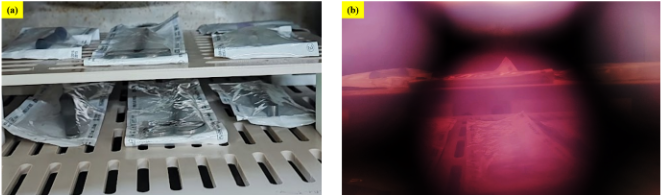
Plasma Sterilization of medical devices and surgical items is carried out in our laboratory using low-temperature non-equilibrium plasma systems developed for efficient microbial decontamination of heat-sensitive materials. Plasma-generated reactive species such as radicals, ions, UV photons, and excited neutrals interact with microorganisms and lead to inactivation of bacteria, spores, fungi, and biofilms without causing significant thermal damage to the substrate. The laboratory investigates the influence of plasma operating parameters, gas chemistry, pressure, exposure time, and power on sterilization efficiency and material compatibility.
The research is focused on developing environmentally friendly and residue-free sterilization approaches for polymeric and metallic medical devices, surgical tools, catheters, wound-care materials, and biomedical components. Particular emphasis is given to plasma sterilization of temperature-sensitive and chemically sensitive materials where conventional steam or chemical sterilization methods are unsuitable. In addition to microbial inactivation studies, the laboratory also investigates plasma-induced surface modifications that can improve biocompatibility, reduce bacterial adhesion, and minimize post-sterilization contamination risks. Advanced microbiological and surface characterization techniques are employed to correlate plasma treatment conditions with sterilization performance and material integrity.
4.VERY LOW PRESSURE PLASMA SPRAY (VLPPS)
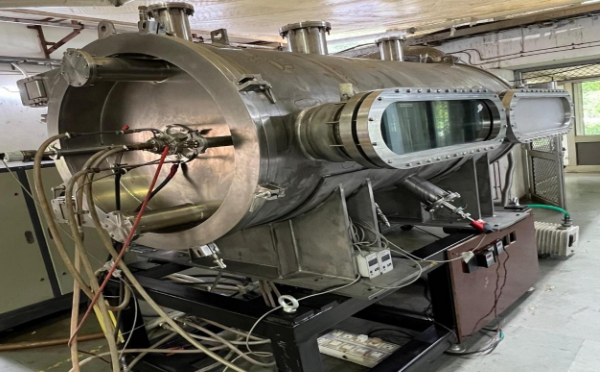
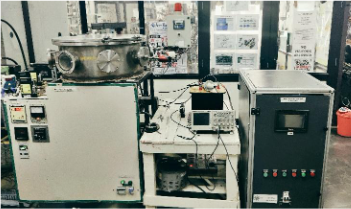
The Very Low Pressure Plasma Spray System (VLPPS) is an experimental facility developed for thermal barrier coatings under controlled low-pressure conditions. The low-pressure operating environment enhances coating quality by minimizing oxidation and improving particle melting and deposition efficiency. Initially designed for thermal barrier coating applications, the facility is now being extended for tungsten (W) and boron carbide (B4C) coatings for fusion applications. Tungsten is preferred for plasma-facing components because of its high melting point and low sputtering characteristics, whereas B4C offers excellent hardness and neutron shielding capability. The VLPPS facility supports research aimed at developing coatings for fusion reactor environments.
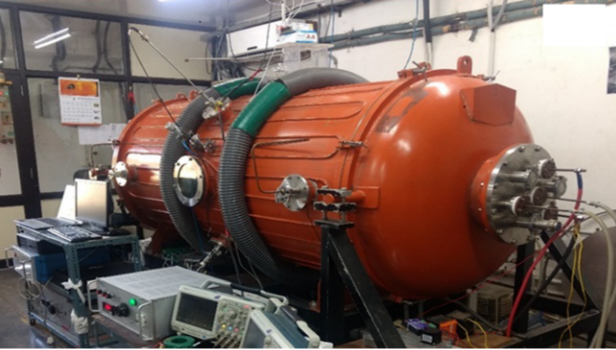
Magnetic reconnection is a fundamental plasma process involving the breaking and reconnection of oppositely directed magnetic field lines, resulting in changes in magnetic field topology and conversion of magnetic energy into plasma kinetic and thermal energy. This phenomenon plays a crucial role in magnetic confinement fusion and is associated with several critical plasma instabilities, including neoclassical tearing modes (NTMs), sawtooth crashes and runaway electron generation, all of which adversely affect plasma confinement and stability. The objective of this project is to investigate the role of magnetic reconnection in these plasma processes.
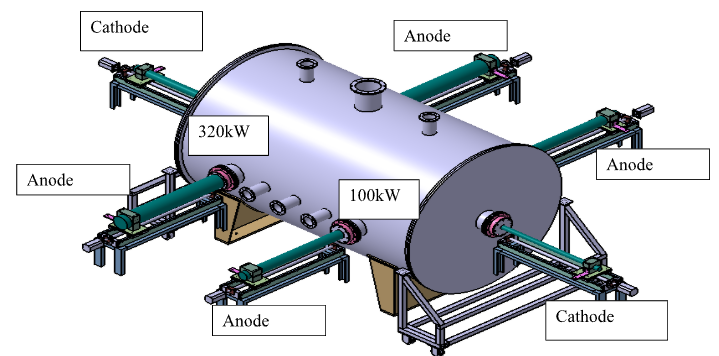
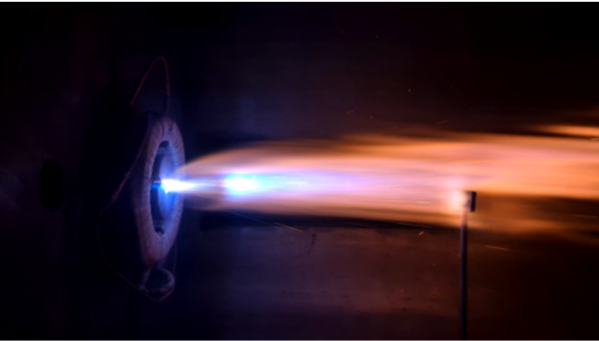
This high power plasma torch system was tested successfully at 320kW power continously for 8 hours. This plasma torch system is based on graphite electrode based torch assembly. The electrothermal efficiency was observed to be more than 90% and the errosion rate of graphtie electrodes were observed to be 15mm per hour. This torch can be operated with any kind of inert gas flowing through the hollow graphite electrodes.
7.PLASMA TEXTILE ACTIVITY
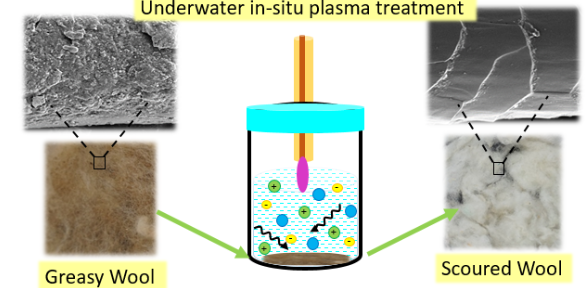
Atmospheric-pressure air plasma systems suitable for inline textile processing have been developed and installed at several locations. The experiments involve plasma processing and optimization on the surfaces of various types of fibers, yarns, and fabrics, along with the study of changes in their physicochemical properties. Experimental studies have been conducted for improving the spinnability of Angora wool, desizing and scouring of cotton, enhancing the shrink resistance of wool fibers, and increasing the surface energy of several polymeric materials [1]. Recent project activities with a private company involve the surface modification of polyester fabric for improving adhesion in composite development. The surface energy of polyester has been enhanced from 45 dynes to 62 dynes, and the O/C ratio has increased from 0.28 to 0.51. Another experimental activity includes the use of underwater in-situ air plasma for the scouring and bleaching of wool fibers. The residual grease content of the wool fibers has been reduced from 19% to 0.75%, and the whiteness index has increased from 45 to 71 [2]. Furthermore, this underwater air plasma is being explored for hand-sanitization applications. Preliminary results show a 3-log bacterial reduction for Escherichia coli.
8.IN-LINE TEXTILE TREATMENT BY PLASMA
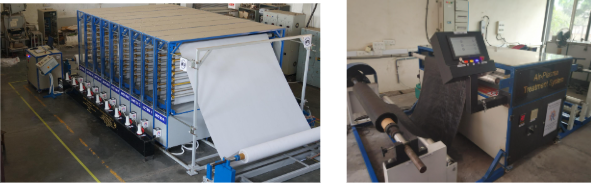
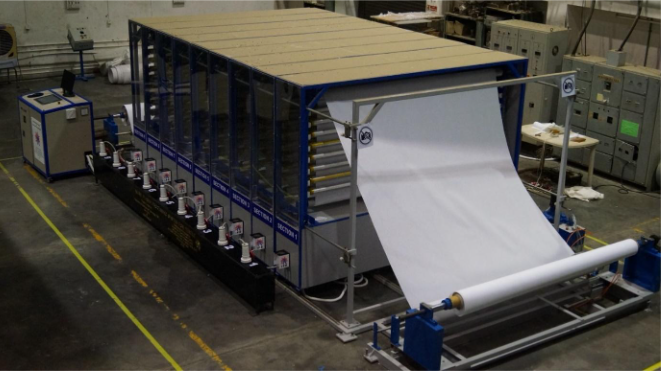
In this system, the plasma discharge takes place between the air gaps (1.2 mm) of cylindrical electrodes each of 2.5 meter width. This work is done to meet the requirement for improvement of functionality of various kinds of textiles including technical textiles. Plasma generation has been successfully tested for a continuous operation of many hours. . This system has been installed and commissioned at MANTRA, Surat. The similar system of reduced dimension to treat 1 meter wide textile has been installed and commissioned at CIPET, Ahmedbad
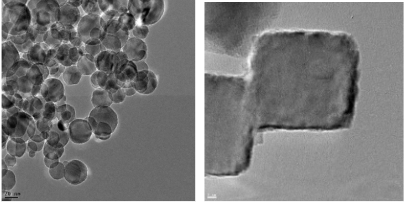
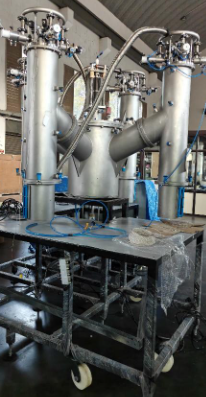
Thermal plasma is used extensively for processing of various materials – including melting, welding etc. This high temperature plasma is also used for preparation of various nanomaterials. This is a single step high temperature physical process vis-à-vis low temperature chemical processes. Advantages include short time scales of nanostructure preparation, non-use of toxic chemicals, single system to prepare various types of nanomaterials and nanostructures etc. Here in IPR, thermal plasma is used to prepare various metal oxide, nitride and carbide nanoparticles and other nanostructures. From L to R: Plasma based nanopowder synthesis system; Nanoparticles of TiO2 and Nanocubes of Cobalt oxide
Division Head

Team Members



Rahul Kanodia
Designation
:
Scientific Officer-C


Ramesh D Bhatiya
Designation
:
Scientific Assistant-C


Biswaranjan Sahoo
Designation
:
Scientific Assistant-D







Mr. Atikkumar Nareshbhai Mistry
Designation
:
Scientific Officer-F



Nimish Sanchaniya
Designation
:
Scientific Assistant-C



Aadambhai Bhikhubhai Sanghariyat
Designation
:
Scientific Officer-E