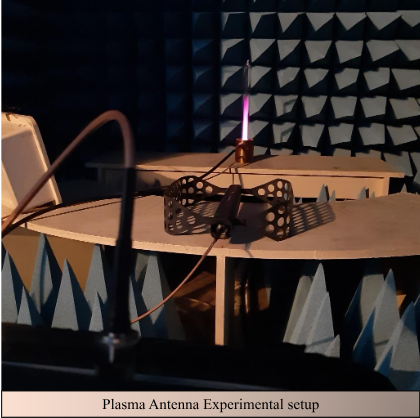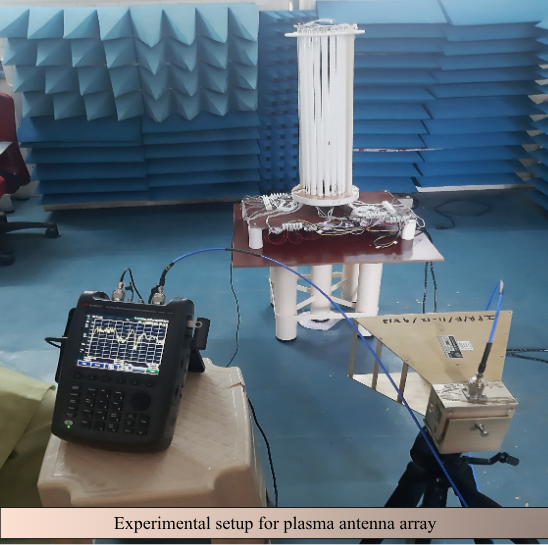

The RCTS section is actively engaged in the design, development, and experimental evaluation of advanced plasma-based reconfigurable antenna systems for next-generation communication and defence applications. Current work focuses on the development of compact plasma antennas and multi-element plasma reflector arrays operating in the VHF/UHF range using ionized gas as radiating and reflecting elements. The team is investigating the effect of key plasma parameters, including RF excitation power, gas pressure, plasma column dimensions, and array configurations, to achieve stable plasma generation, wideband performance, and adaptive radiation characteristics. Ongoing experimental studies include beamforming, tunable radiation pattern control, rapid ON/OFF switching, and low radar cross-section operation in de-energized conditions.
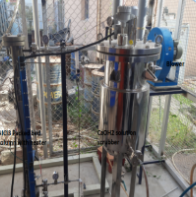
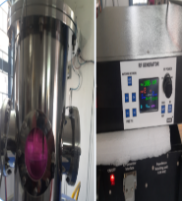
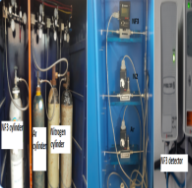
In parallel, the RCTS section has developed a 13.56 MHz radio-frequency (RF) glow discharge plasma etching facility using NF₃ gas at the Institute for Plasma Research for plasma processing and surface treatment applications. The facility is designed to generate reactive fluorine radicals through ionization and dissociation of NF₃ gas in plasma. These highly reactive fluorine atoms interact with silicon substrates to form volatile SiF₄, which is subsequently removed using a vacuum pumping system. The facility operates over a pressure range of 5–80 Pa and RF power range of 20–150 W, enabling controlled plasma generation and experimental investigations for advanced plasma applications.